
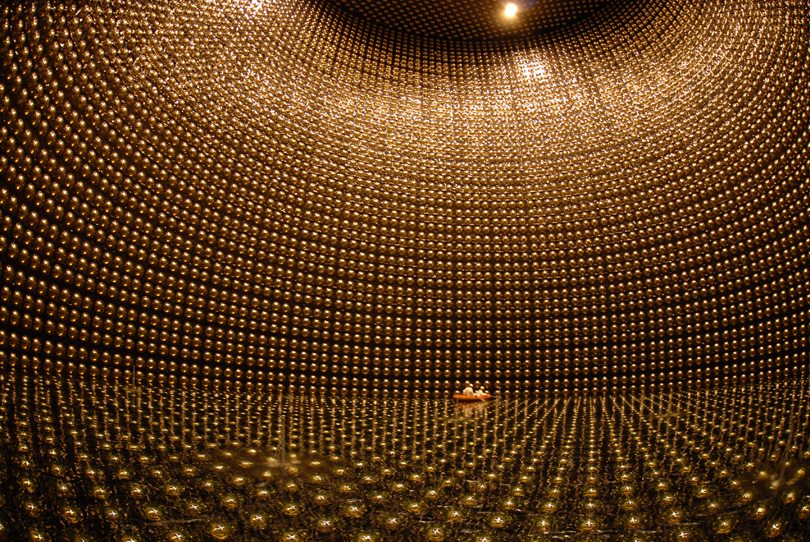
Deep beneath the earth’s surface, in mountain tunnels, Antarctic ice, and abandoned zinc and gold mines, physicists search for the elusive ‘ghost particle’ known as neutrino. Spat out of supernovas, colliding galaxies, and the Big Bang itself, about 100 trillion of these ghostly subatomic entities careen through our bodies at nearly the speed of light every second, going unnoticed because of their miniscule mass and neutral charge. To detect them at all, scientists the world over have had to build giant subterranean observatories which they must move around in by row boat. To the eye of a vintage sci-fi fan, these strangely beautiful facilities might look like they’ve come straight out of Barbarella or Flash Gordon…
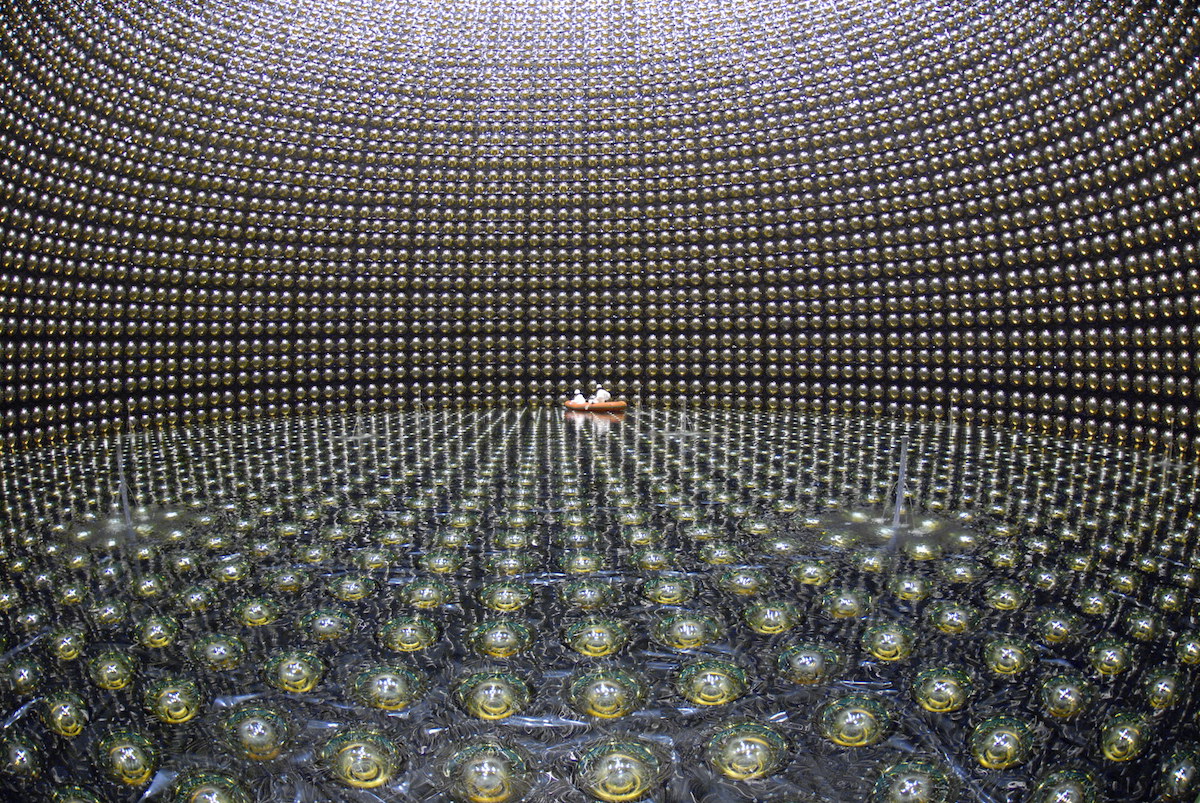
Neutrino detection chambers like SNO, Borexino, and Super Kamiokande (pictured above) are breathtaking feats of engineering located in some of the most remote regions on the planet. Because neutrinos can be confused with other subatomic entities such as cosmic rays, detectors must be nestled deep within the earth where only the infinitesimal ‘ghost particles’ can penetrate.
Super Kamiokande
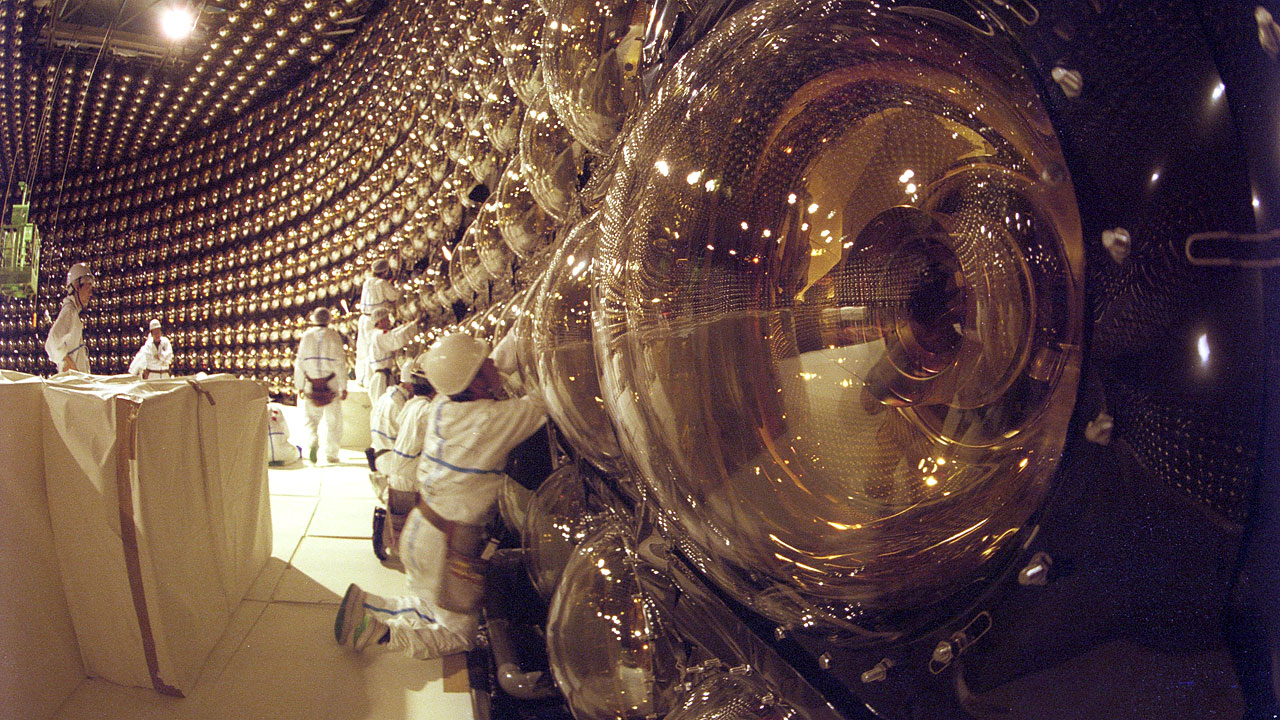
The Super Kamiokande is the world’s largest neutrino detector, located 1,000 (3,300 feet) meters underground in the Mozumi zinc mine in Hida’s Kamioka area of Japan.
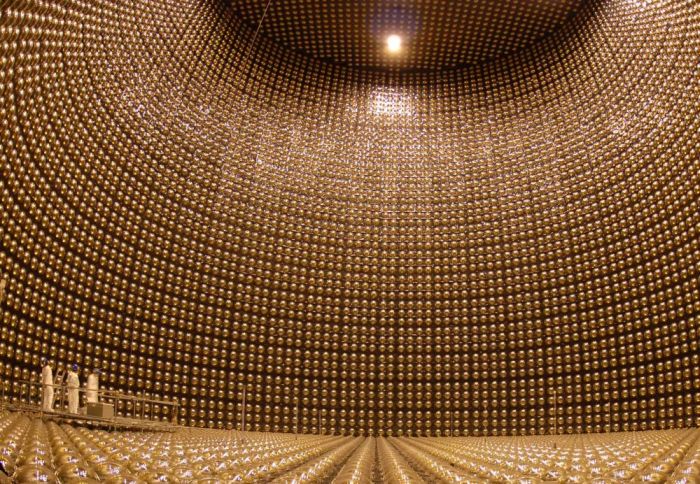
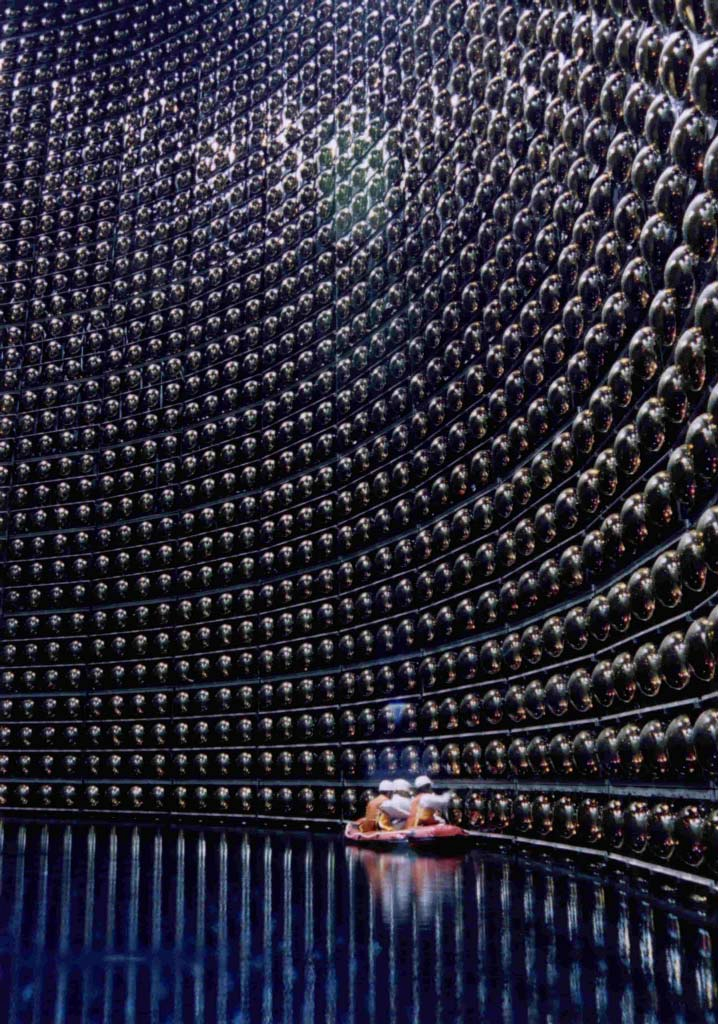
This enormous array of light detectors surrounding 50,000 gallons of super pure distilled water inside a domed tank, acts like a trap for neutrinos. The chamber lies in wait for this particle that weighs next to nothing and hardly interacts with ordinary matter at all. On the rare occasion it does, it produces a ghostly ring-shaped flash of light thanks to the 13,000 photomultiplier detectors (PMT’S) covering the walls.
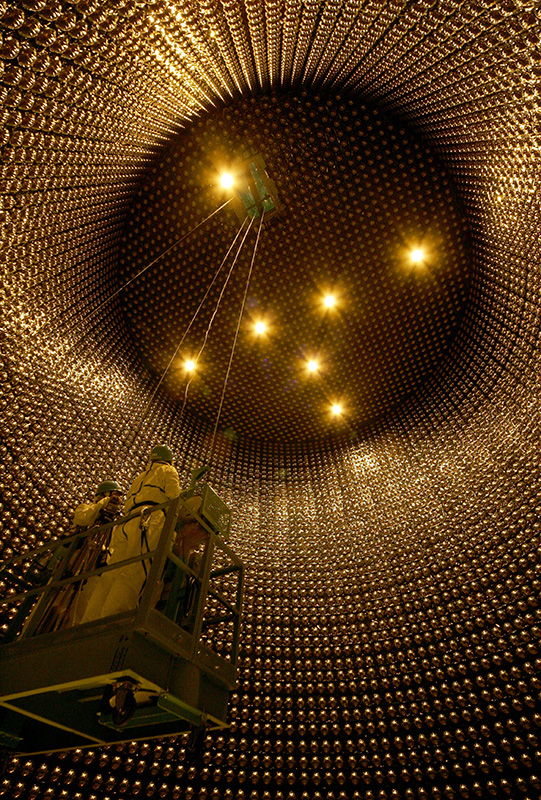
Inside the tank of Super Kamiokande. A detector called “photomultiplier tube” / source
When the neutrino collides with an atom in water, creating an electron, physicists can trace the colliding electron’s path, pinpointing the location of the source (be it a dying star, a catastrophic cosmic event, or our own sun) of the neutrino.
source
Completed in 1996, the observatory was designed to study solar and atmospheric neutrinos, search for proton decay, as well as keep an eye on the Milky Way Galaxy for supernovae– those stellar explosions that briefly outshine an entire galaxy, radiating as much energy as the Sun or any ordinary star might emit over its lifespan. Only three or four supernovas happen in our galaxy every century.
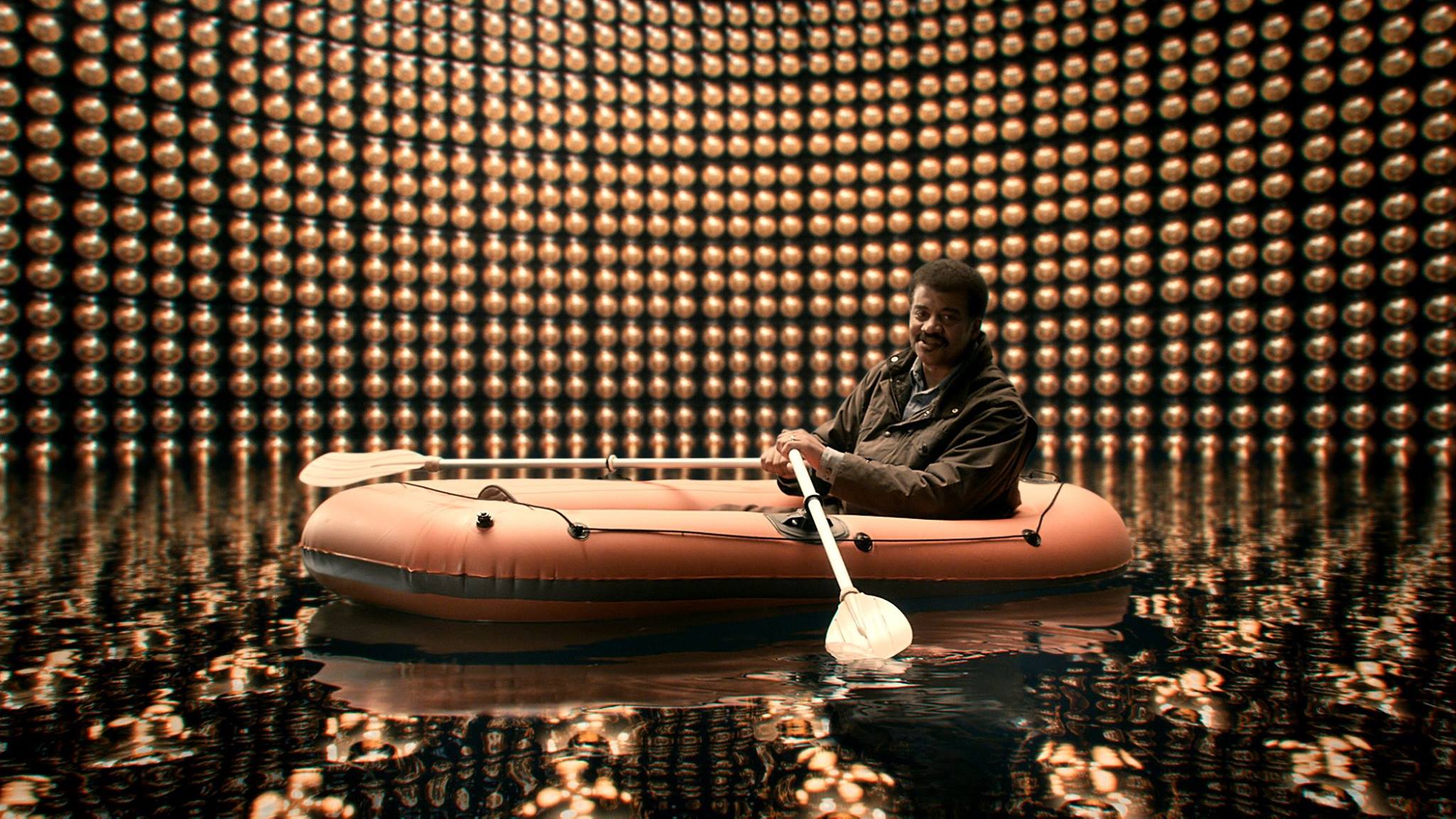
Physicist Neil Degrasse Tyson visited Super Kamiokande in the 2014 reboot of Carl Sagan’s Cosmos. Source
Oh, and all maintenance and PMT cleaning is performed via rowboat!
SNO (Sudbury Neutrino Observatory)
source
However impressive previous neutrino detectors are (measurements began to be taken in the 1960s) they’re still only able to observe about half of the of the neutrinos projected by the Standard Solar Model. In 1984, physicist Herb Chen proposed the use of heavy water to capture more so called ‘flavors’ of neutrinos. (There are three types of neutrinos called ‘flavors’: the electron neutrino, the muon neutrino, and the tau neutrino). While Super Kamiokande can only detect electron neutrinos, SNO could detect them all.
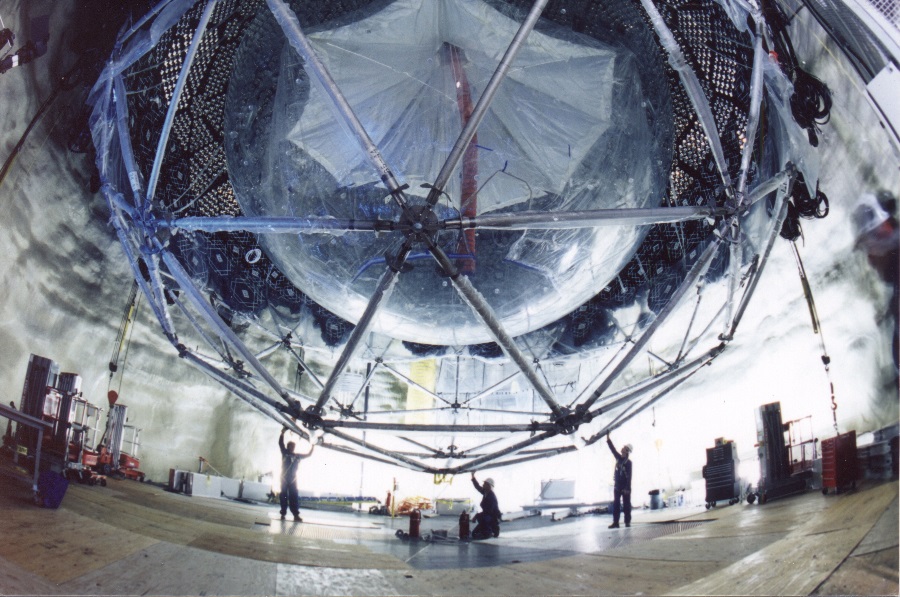
source
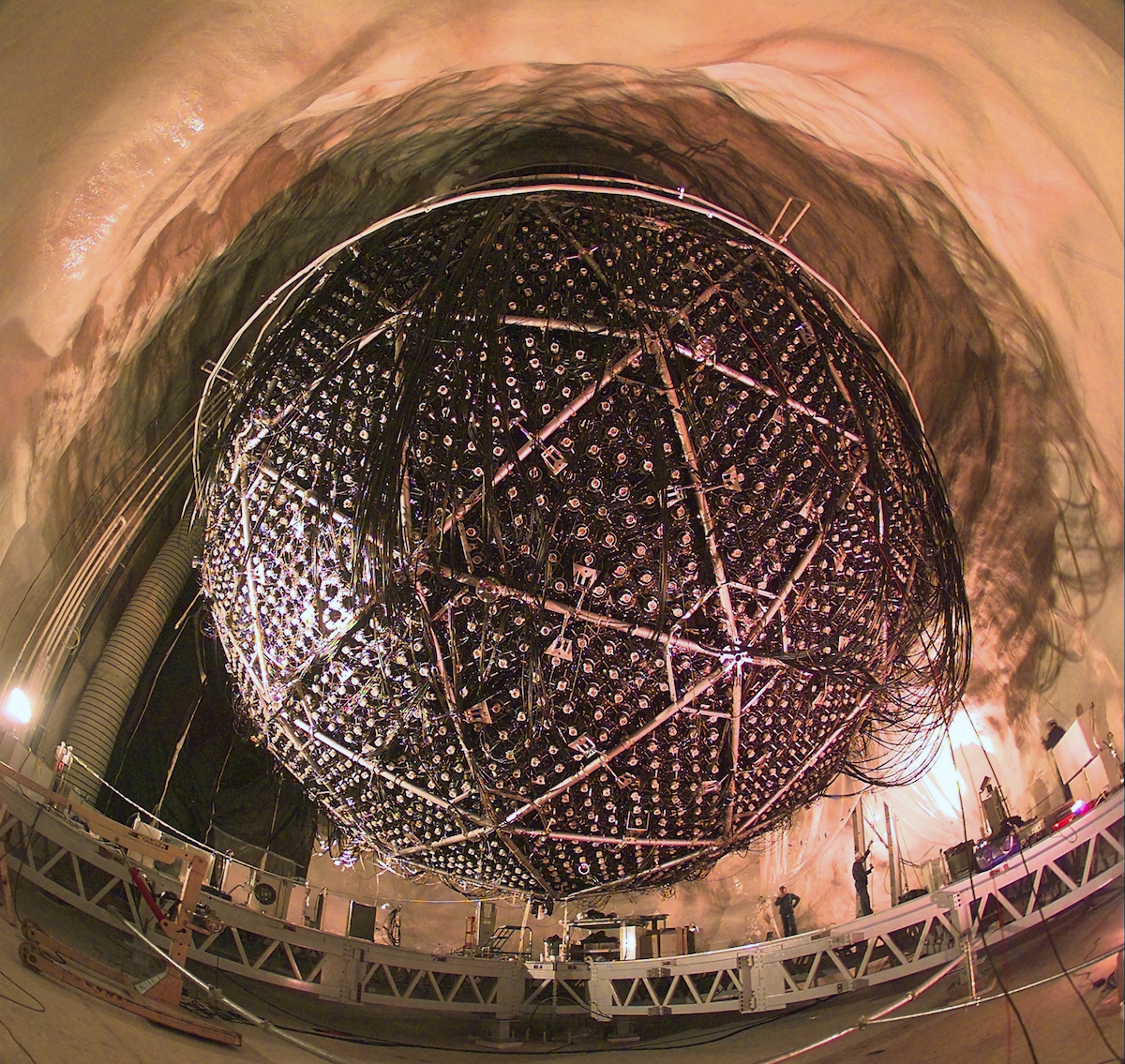
Located in one of the deepest mines in the world, the Creighton Mine in Sudbury, Canada, SNO was a 6-meter-radius acrylic vessel filled with 1,1000 tons of heavy water. Within the vessel was a giant geodesic sphere covered in 9,600 PMTs.
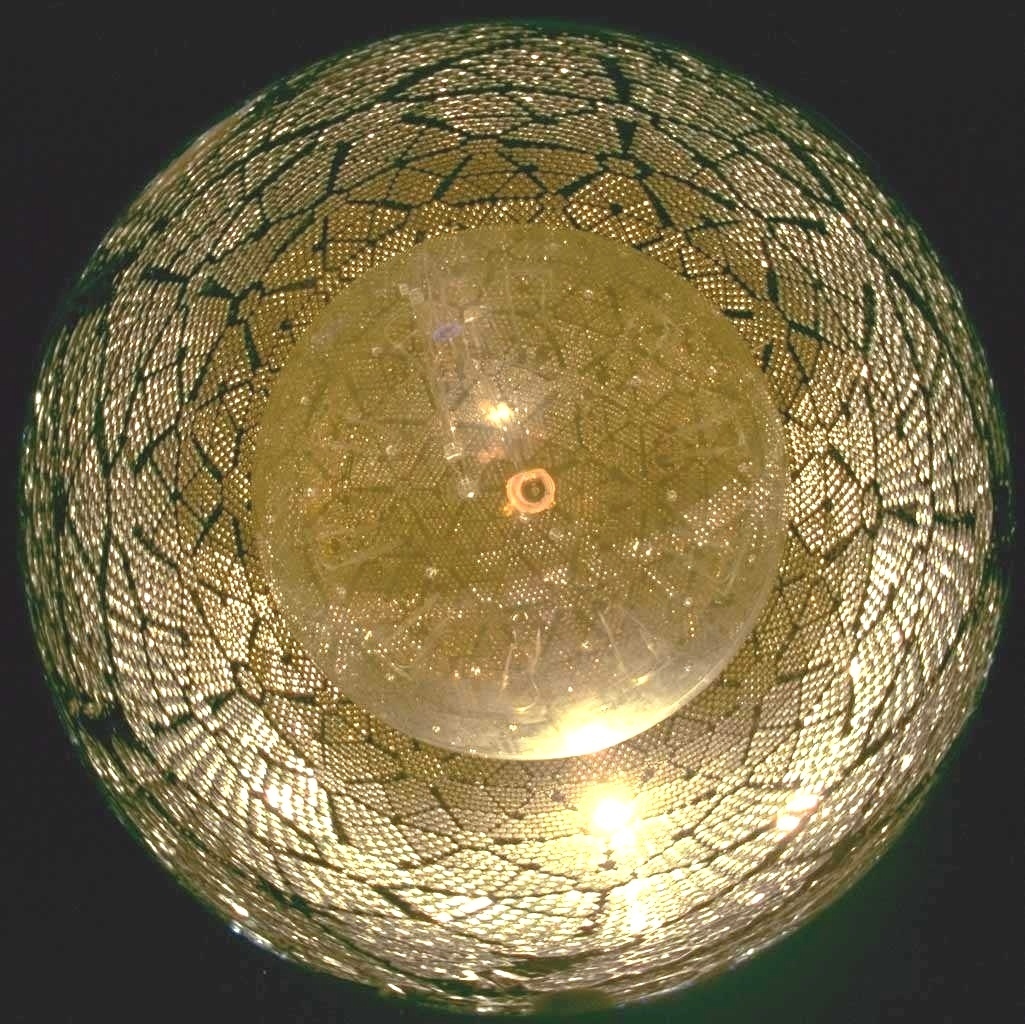
source
The SNO neutrino facility was turned off in 2006 but has since been repurposed for a variety of experiments including dark matter detection. Buried 2km beneath the surface, SNOLAB is the deepest clean room facility in the world.
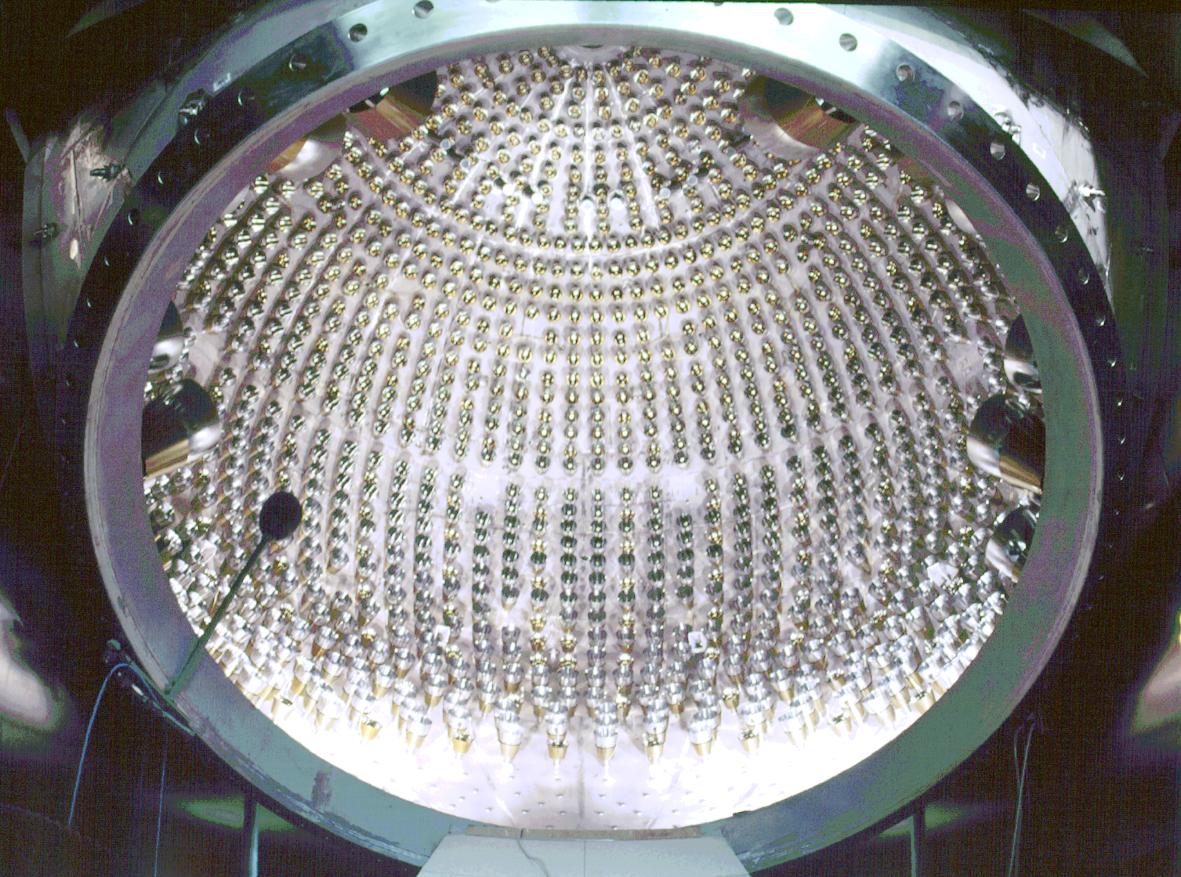
The Borexino Detector
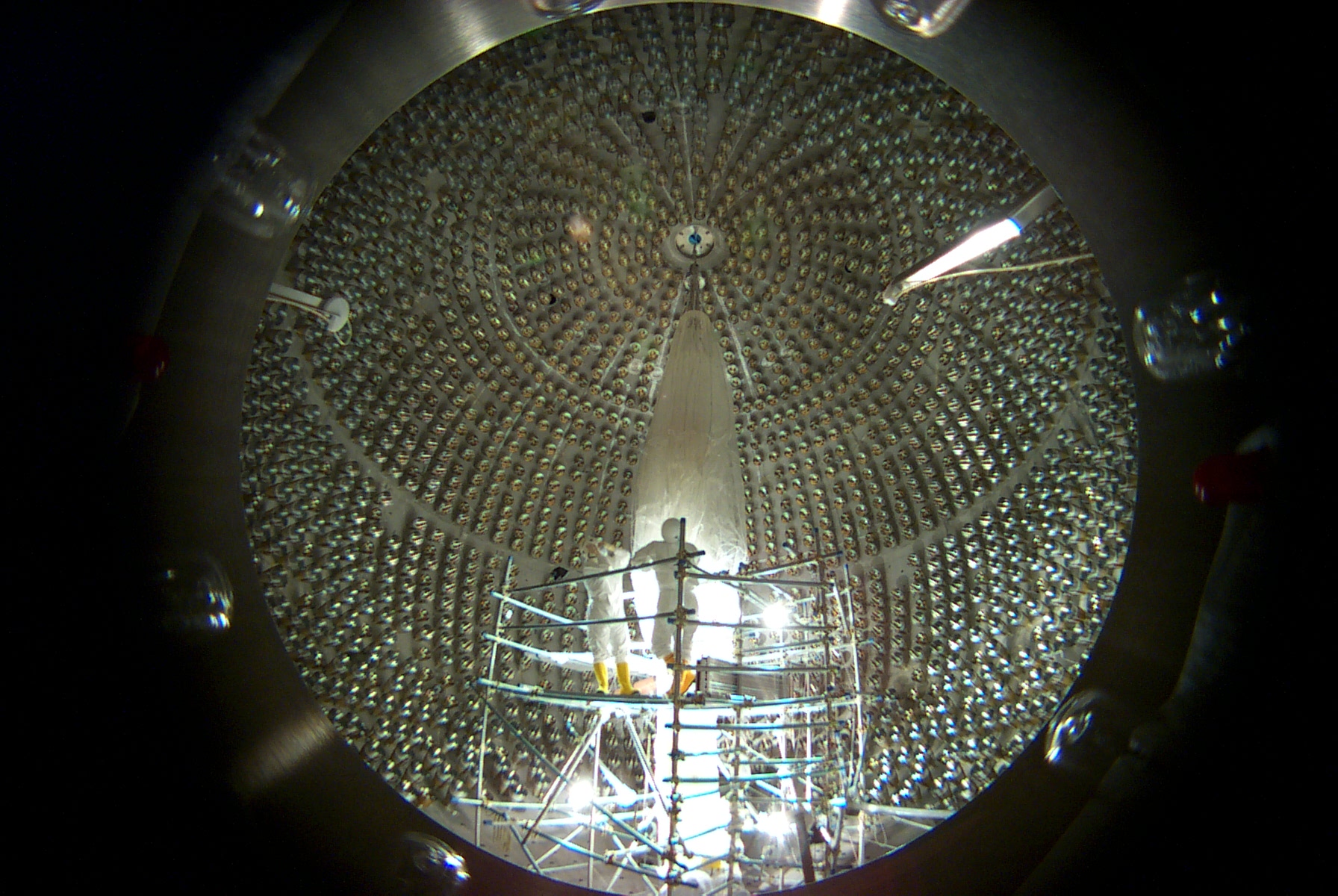
source
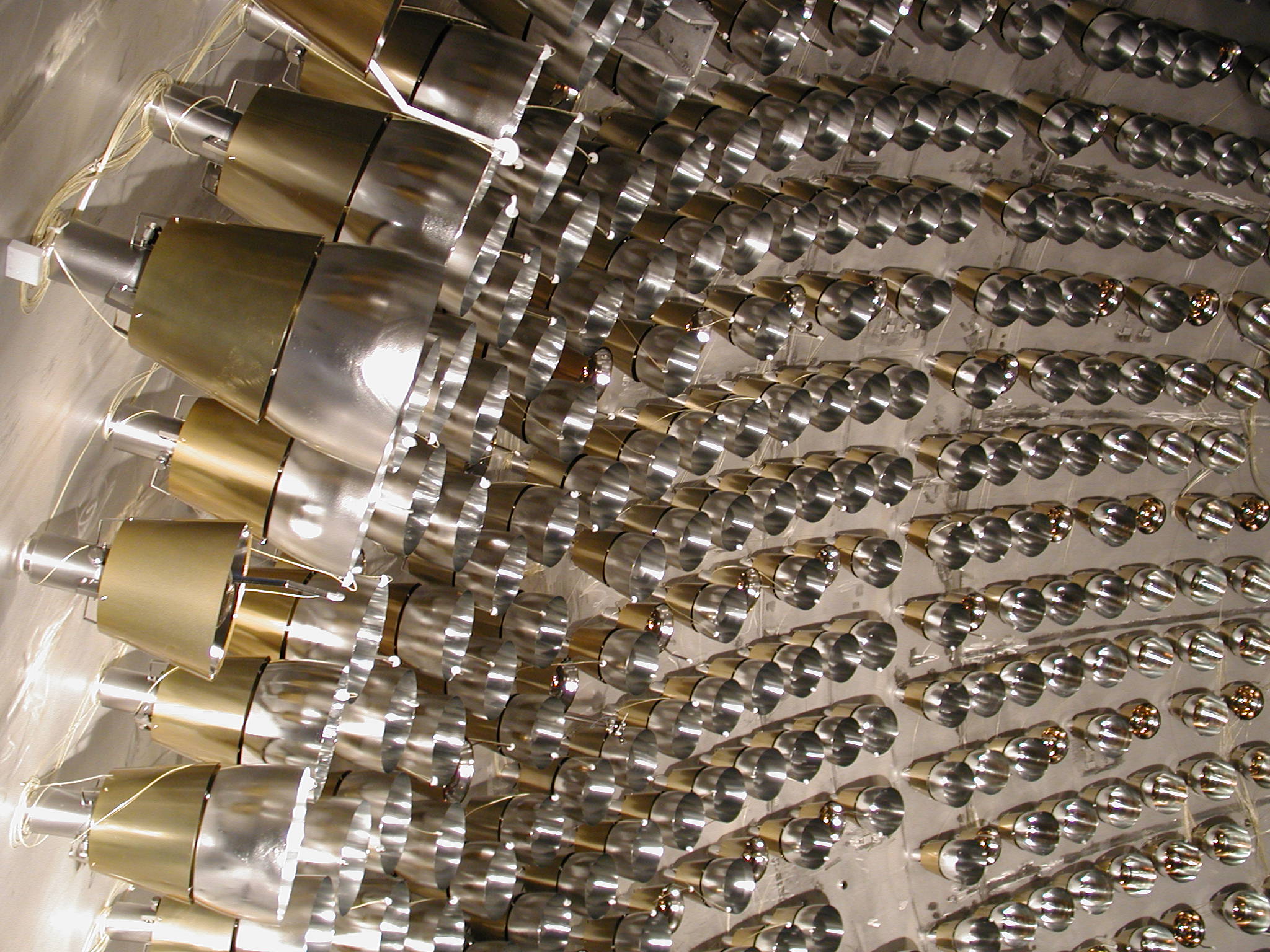
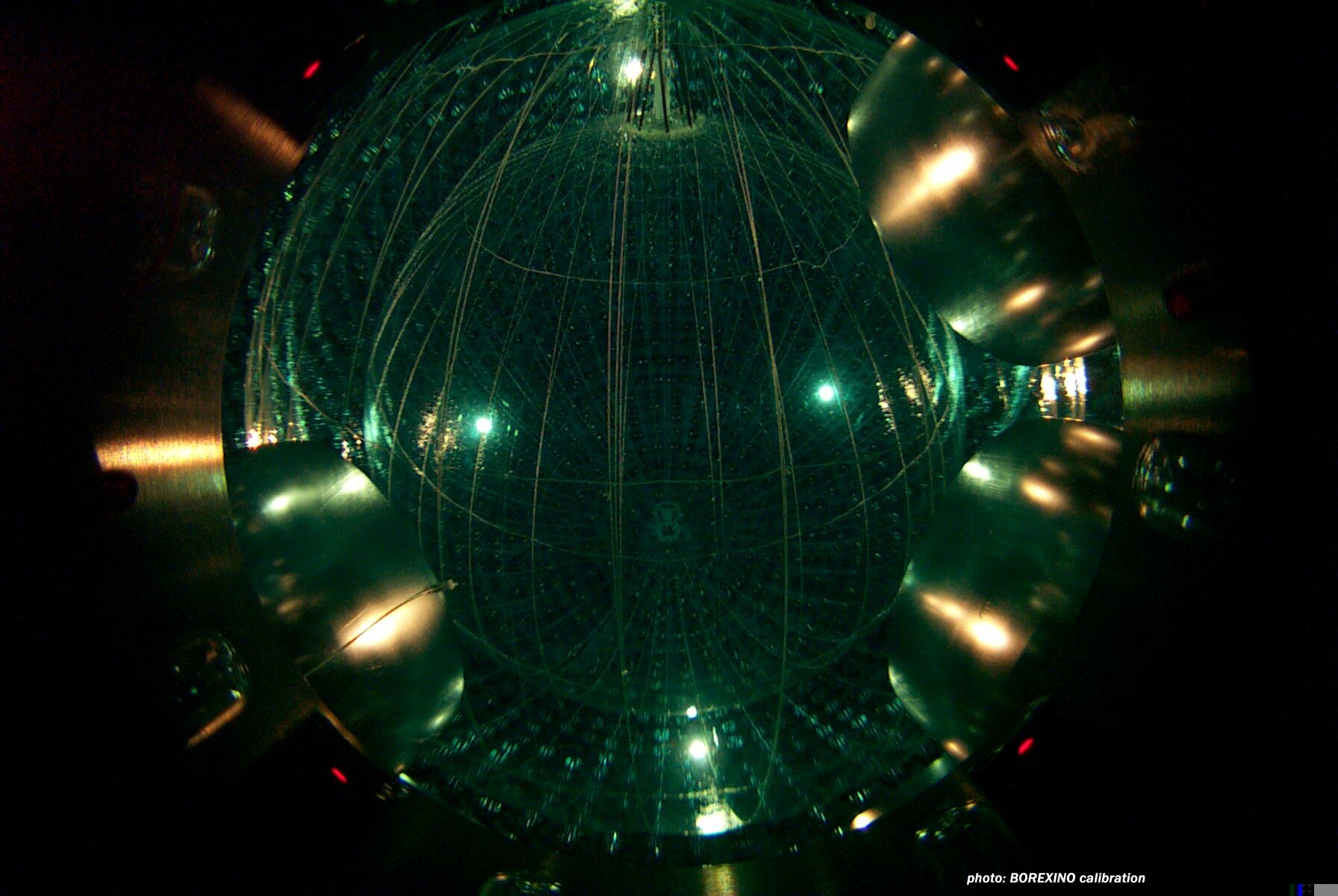
Borexino, similar to SNO, is a stainless steel sphere that holds 2,000 PMTs. Located at the Labortori Nazionali del Gran Sasso near L’Aquila, Italy it is designed to detect low-energy solar neutrinos in real time.
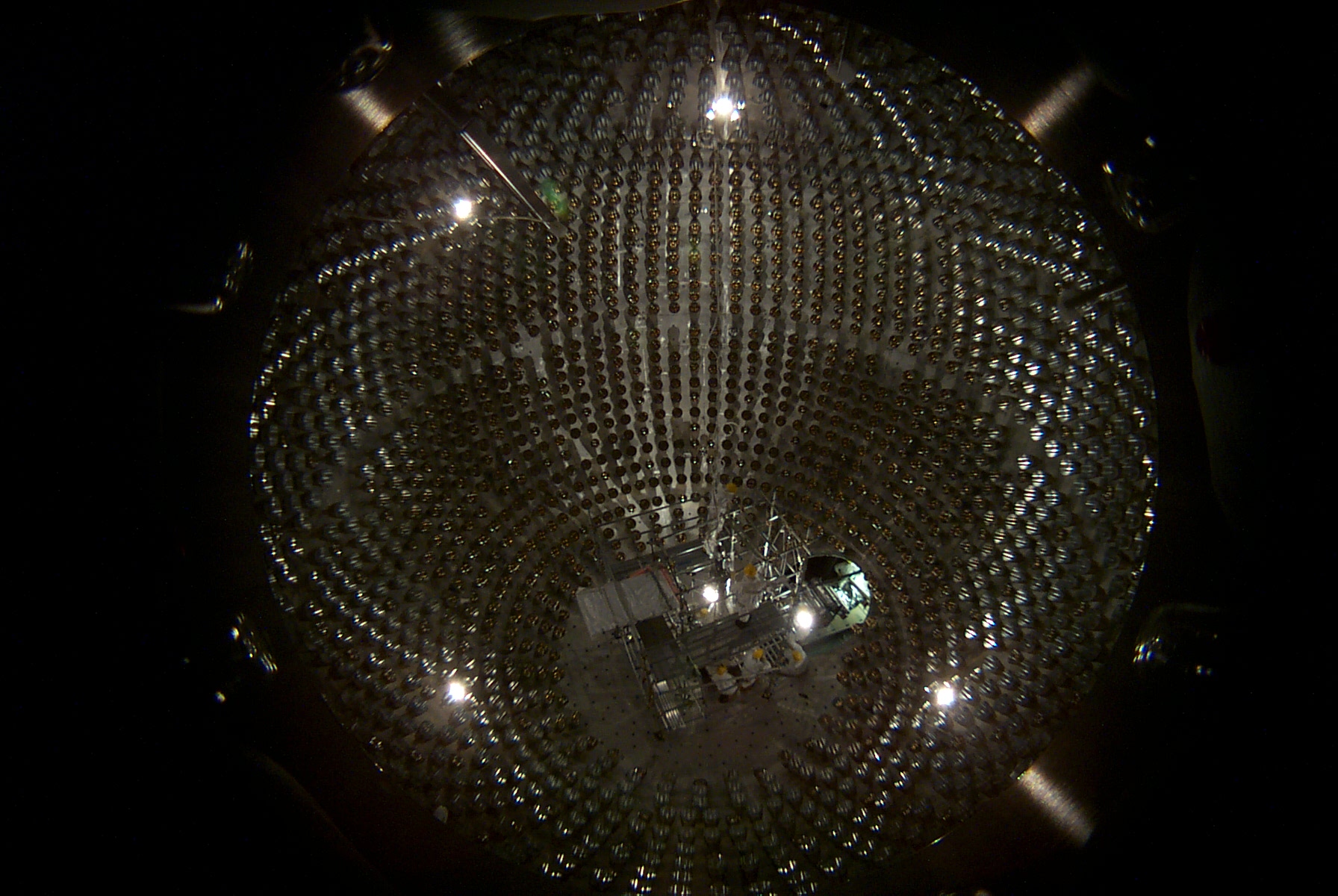
source
In 2010, Borexino observed geoneutrinos, emitted from the Earth’s molten interior, for the very first time.
source
source
source
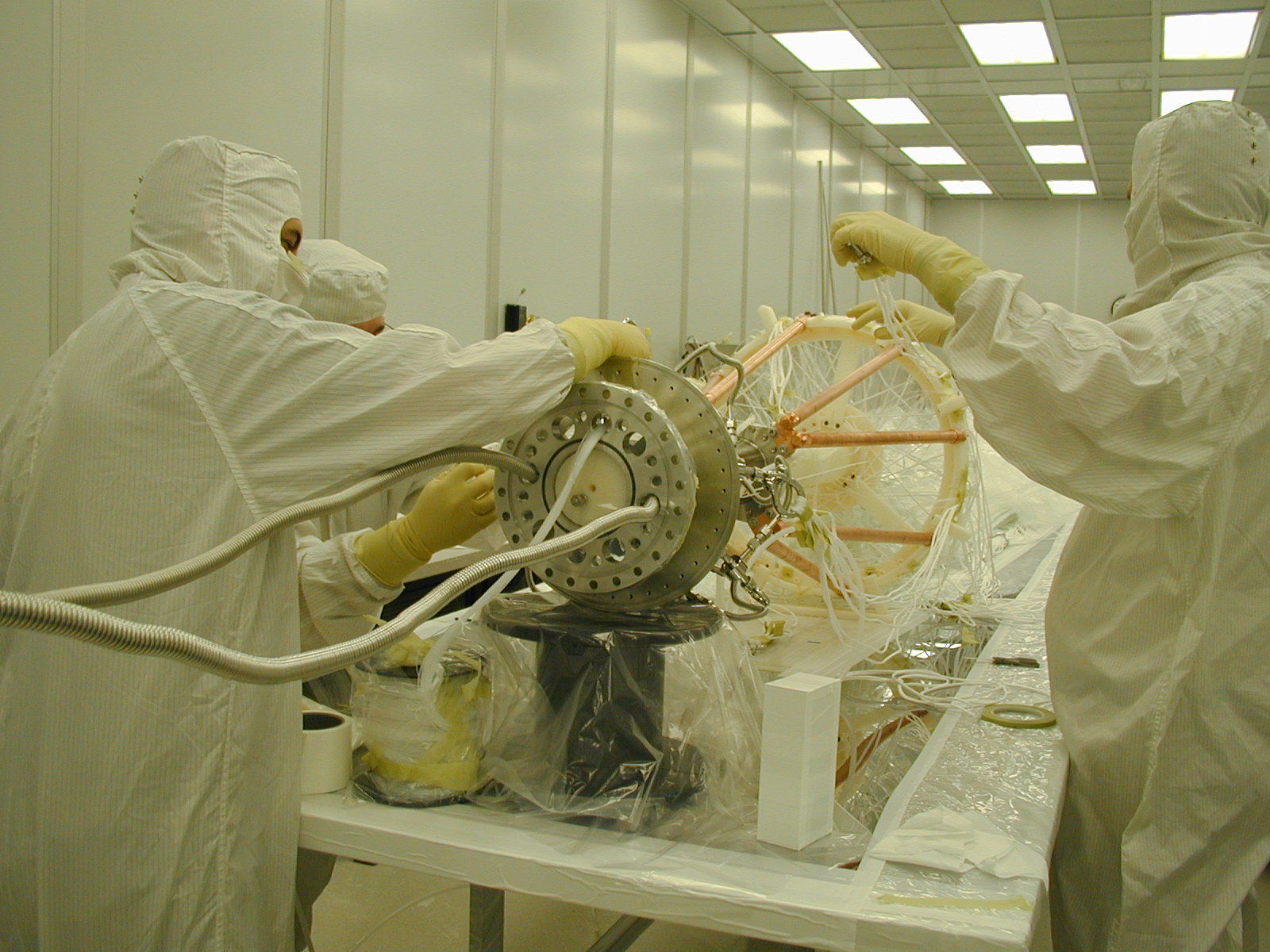
Physicists preparing the vessels assembly … (a.k.a doing some really complicated-looking stuff) / source
In 2015 the Nobel Prize for Physics was shared by Arthur B. MacDonald from the SNO observatory and Takaaki Kajita from Super Kamiokande “for the discovery of Neutrino Oscillations, which shows that neutrinos have mass.”
Physicists are still unsure of the practical application of the study of neutrinos; are they merely messengers born of cataclysmic events or do they hold the key that unlocks the theory of everything?
source
While we wait for answers, we may enjoy the subterranean detectors of the ghost particle as the wonderfully strange inadvertent works of art that they are.