


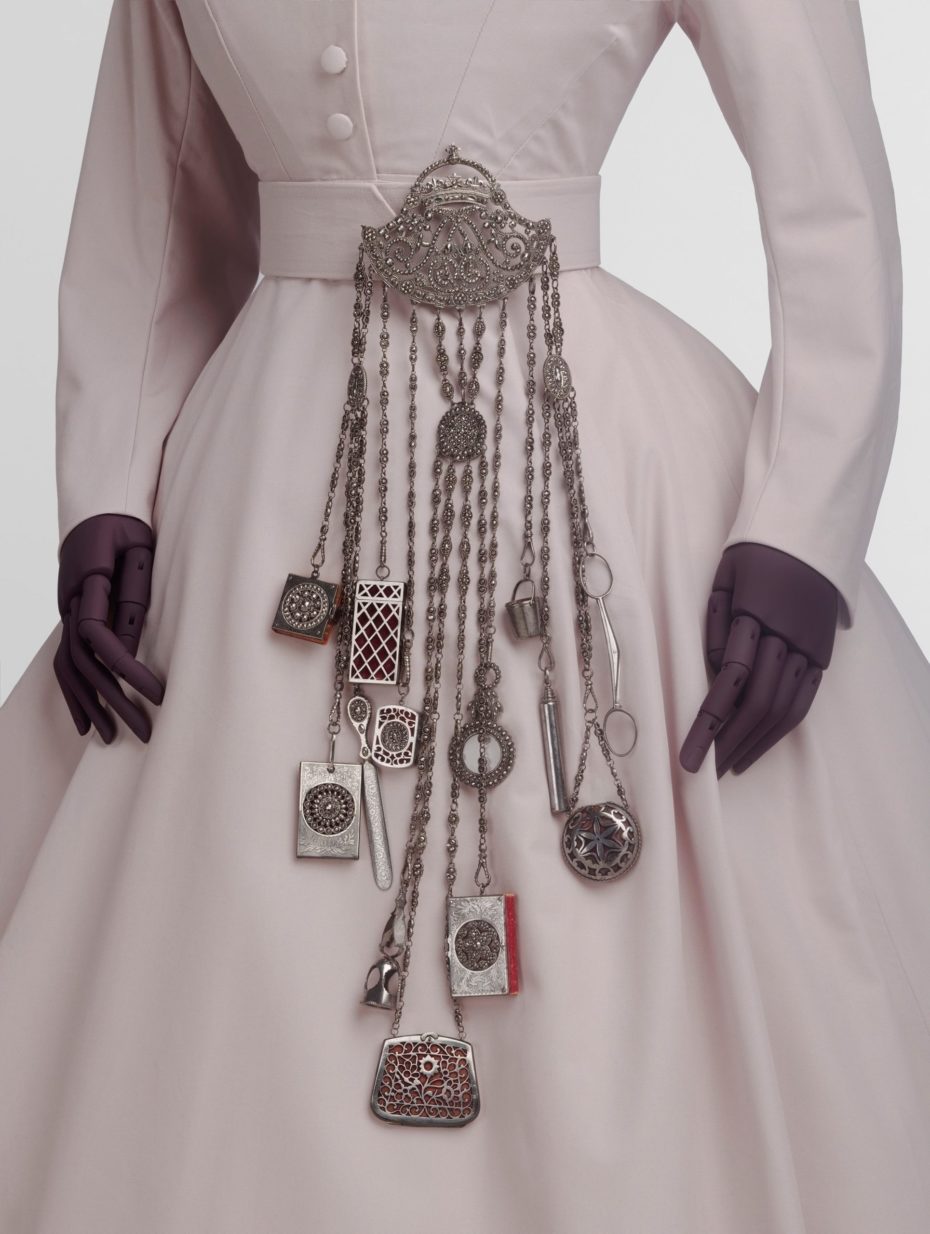
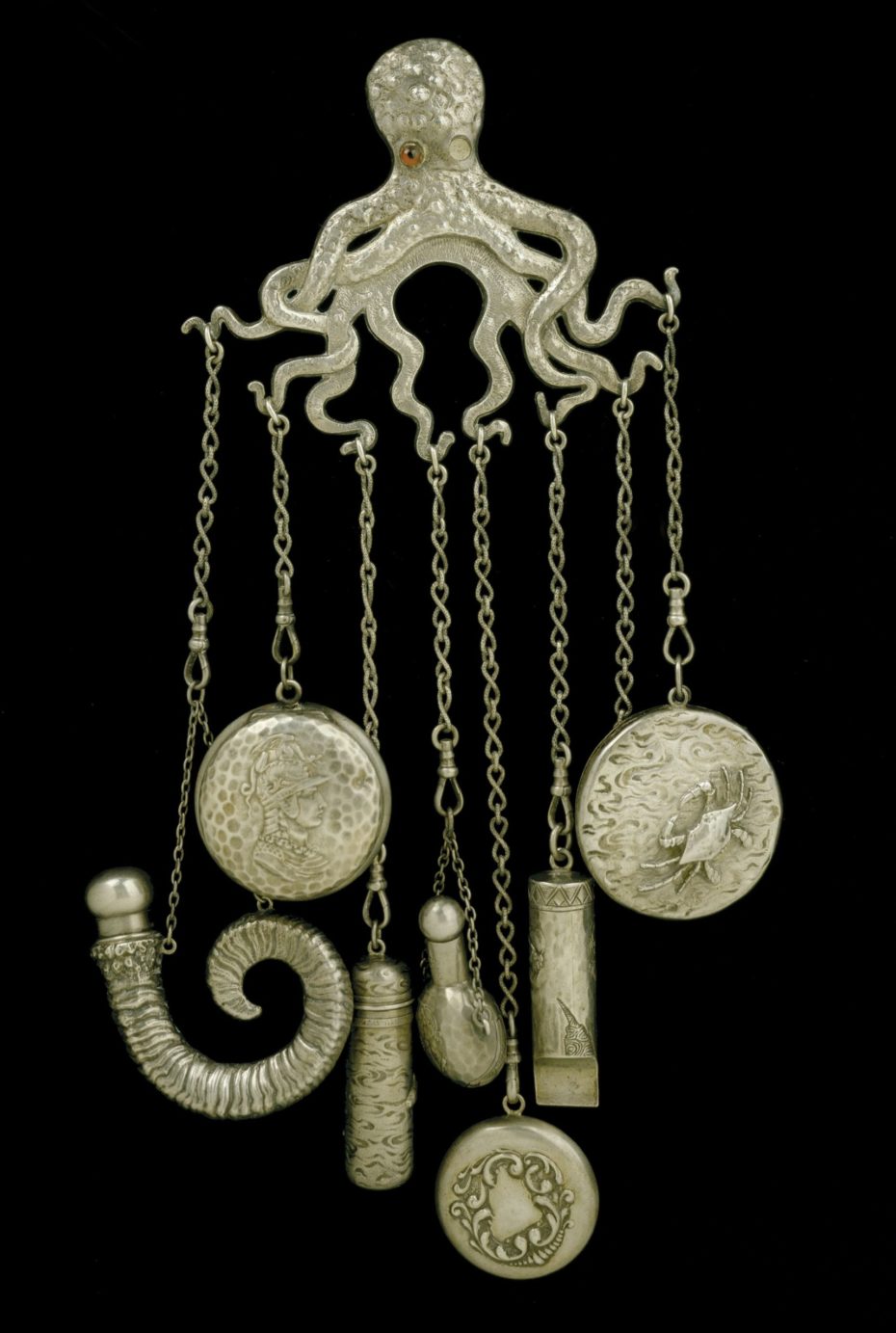
Empty a woman’s handbag inside out and you’ve got the right idea about the chatelaine. Before purses were a woman’s primary accessory, this curious contraption that fell into the annals of fashion obscurity over time, once commonly served to carry her daily armour. Designed very much like a tool belt worn at the waist, the chatelaine held an array of both useful household appendages and fanciful items on a series of chains, reflecting a woman’s hobbies and activities of the day. As fascinating to look at as they are to learn about, let’s take a moment for a little show & tell of the bygone accessory that our foremothers were so very (literally) attached to.
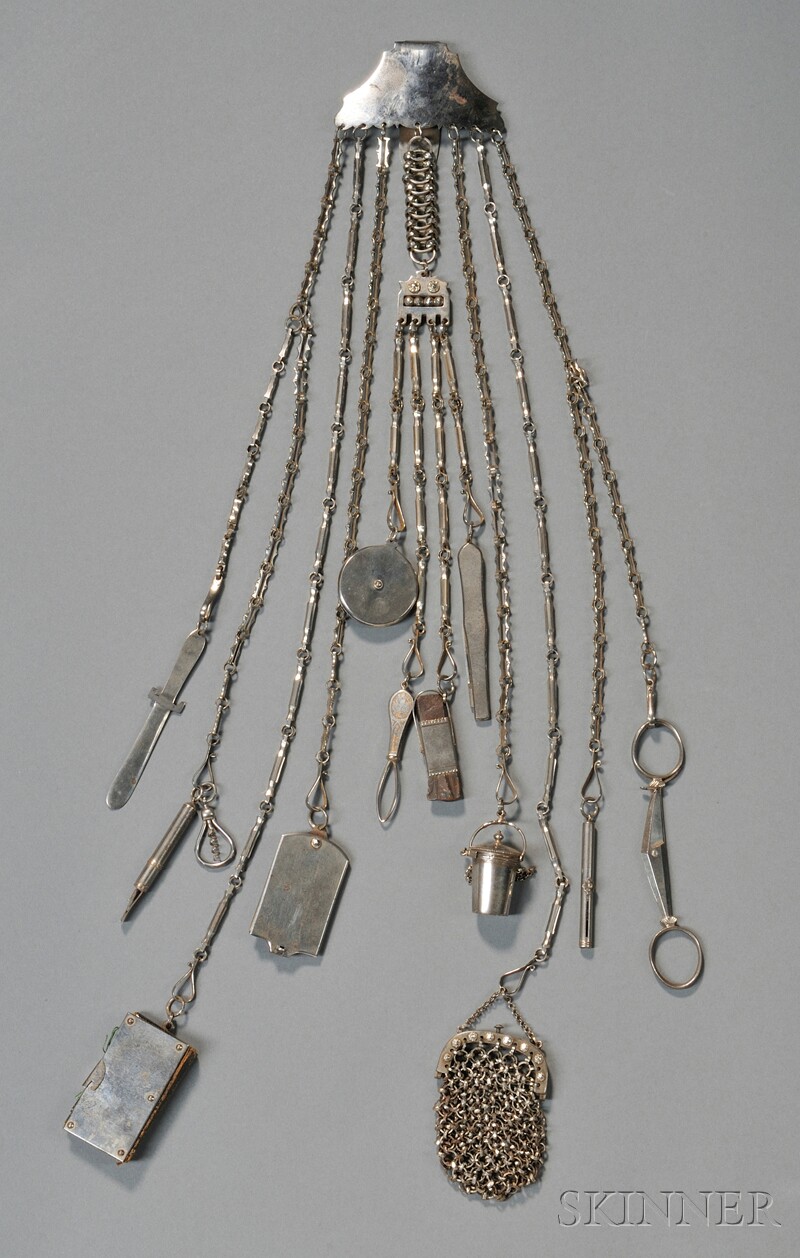
First, let’s speak to their origins and evolution. History tells us that the invention of the “chatelaine”, as it has been referred to since the 17th century, in fact dates back as far as ancient times, when women of the Roman Empire wore them with toiletry tools such as ear scoops, nail cleaners, and tweezers.
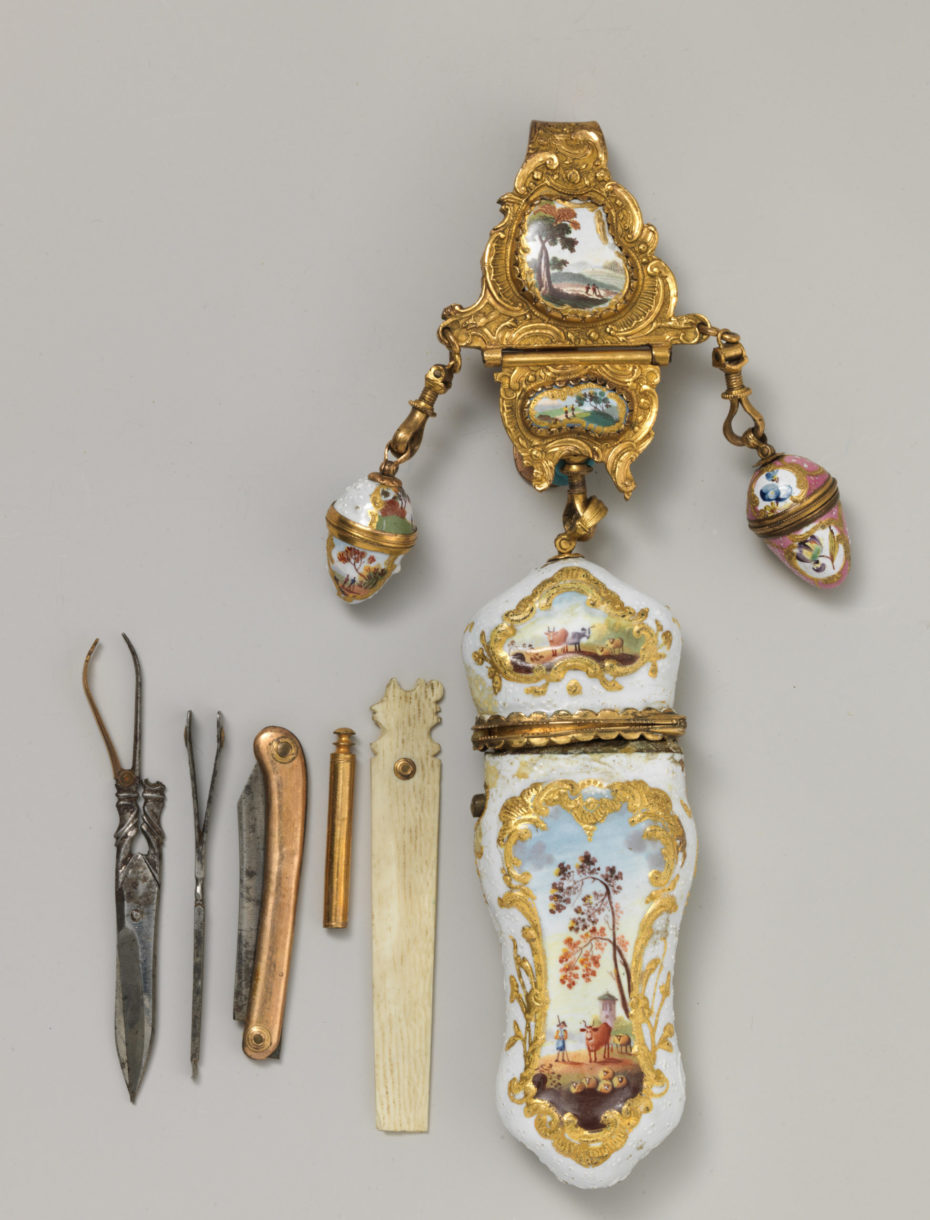
They’ve also been found in the graves of females in the seventh and eighth century, indicating that they held a sentimental significance to women early on.
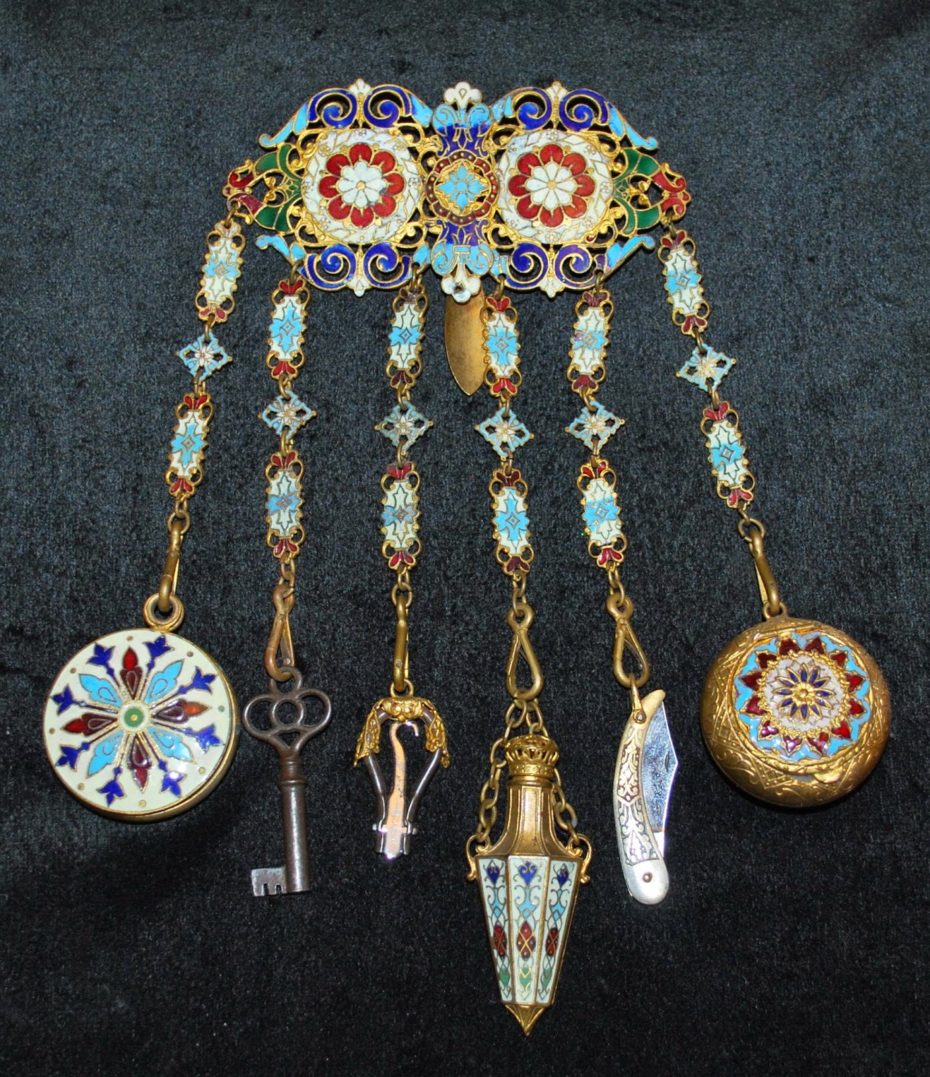
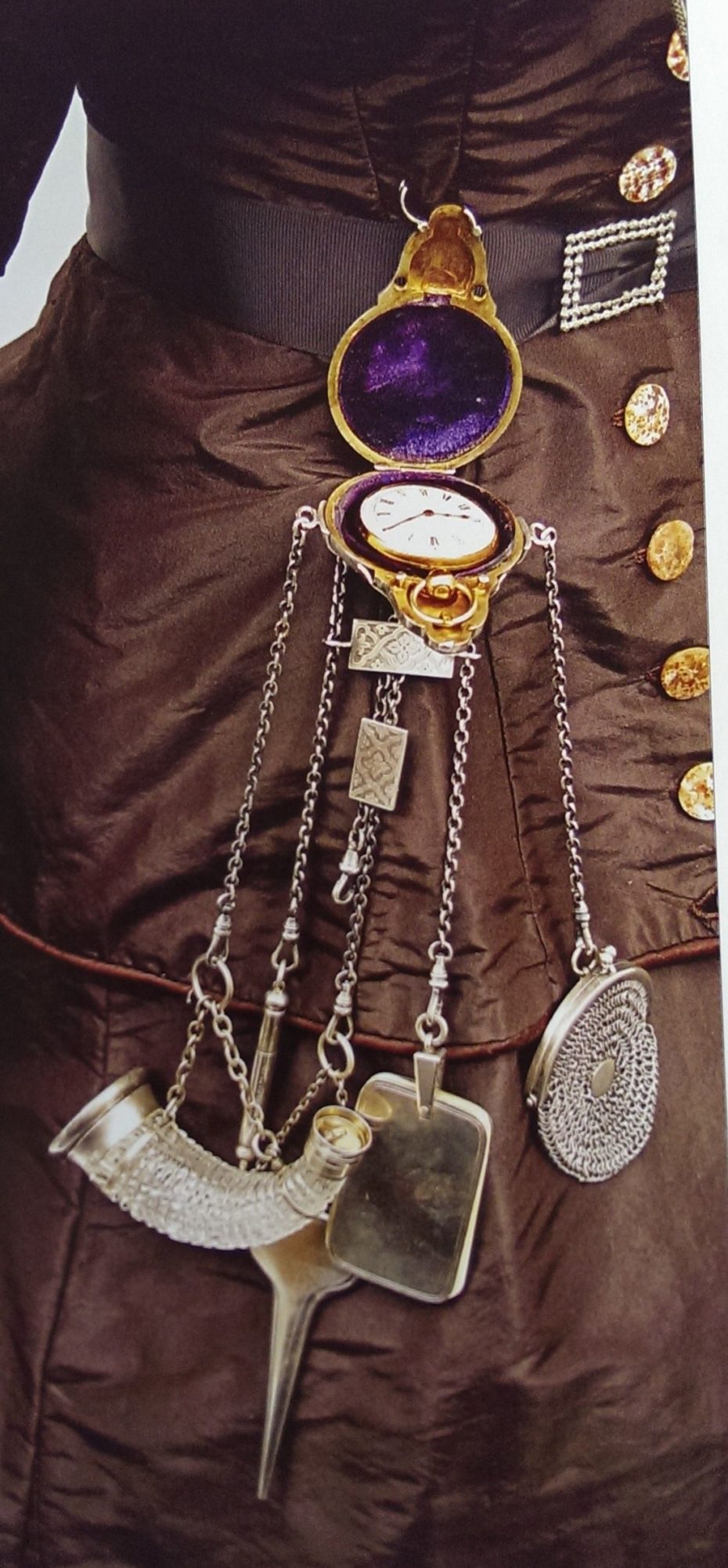
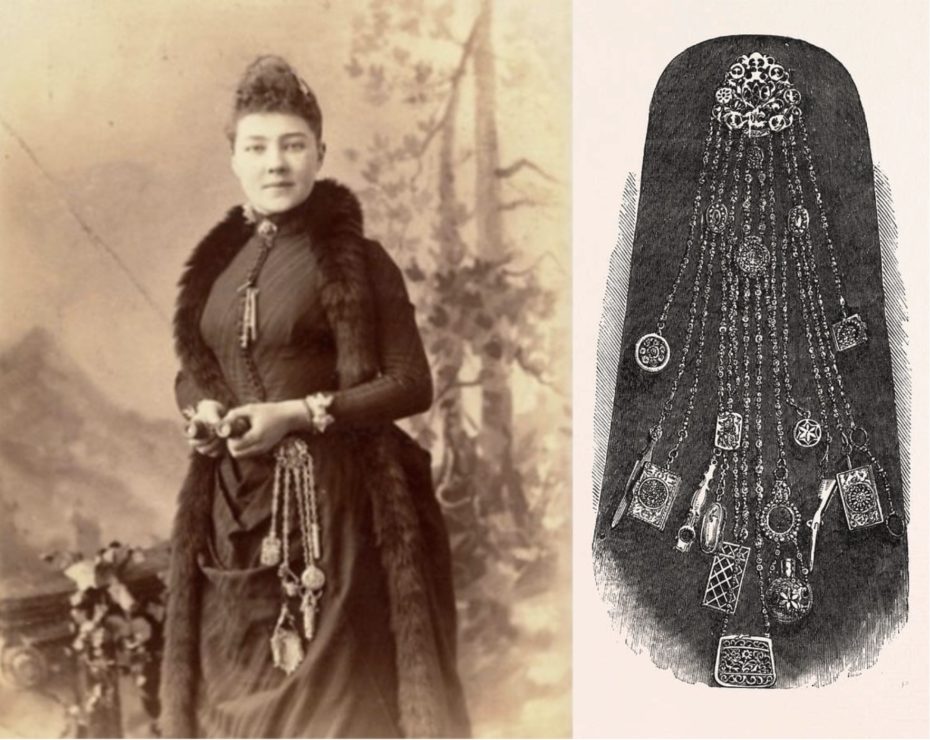
The word itself, chatelaine, derives from the French term châtelaine which translates as the mistress of a chateau, who would typically keep all the keys to the household’s many locked doors, cabinets, pantries, desks and drawers. Having the “keys to the castle”, so to speak, indicated a woman’s seniority and status, who held authority, access to the family’s valuables, power to direct the home’s servants and host its guests. With this being the highest calling to aspire to for most women before the 20th century, unmarried daughters and young debutantes would have strove to imitate this symbol of senior status in the household by fashioning their own, more decorative versions in hopes of one day becoming “The Lady Chatelaine”.
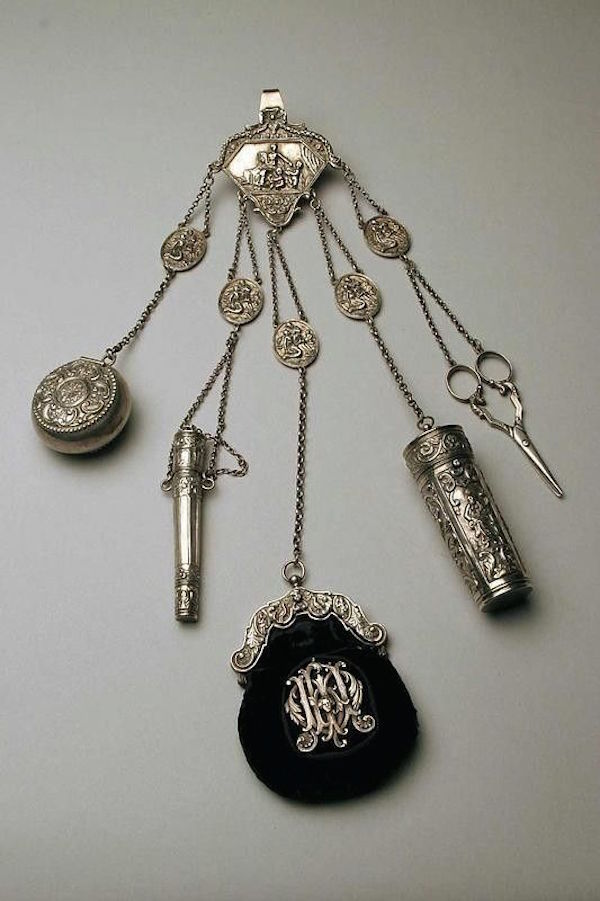
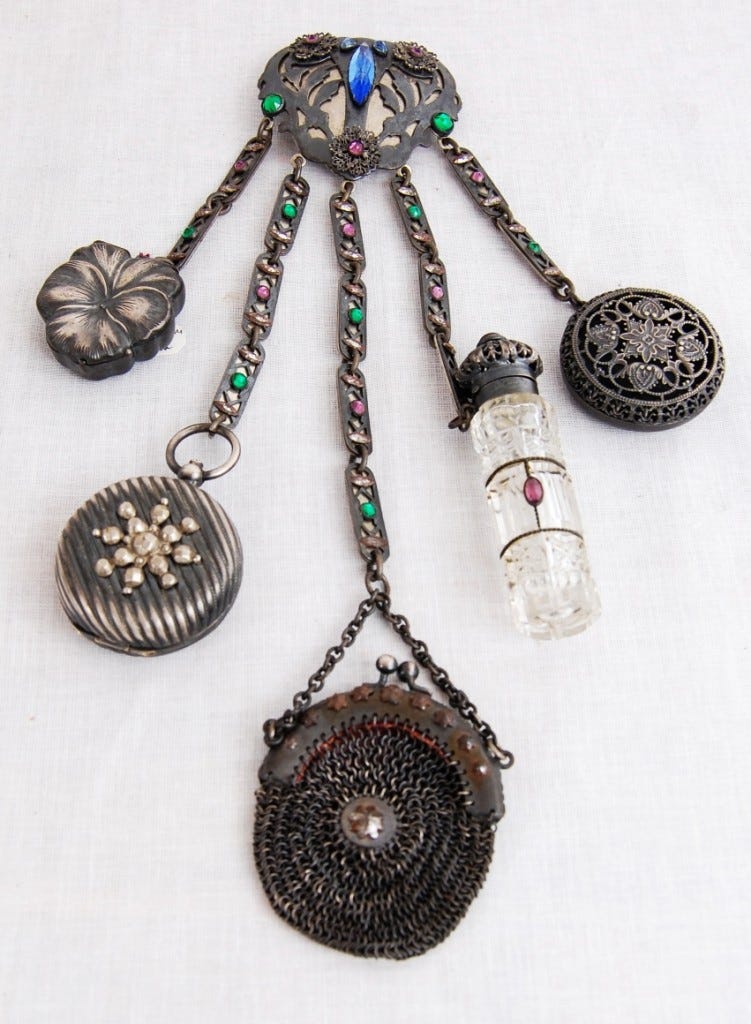
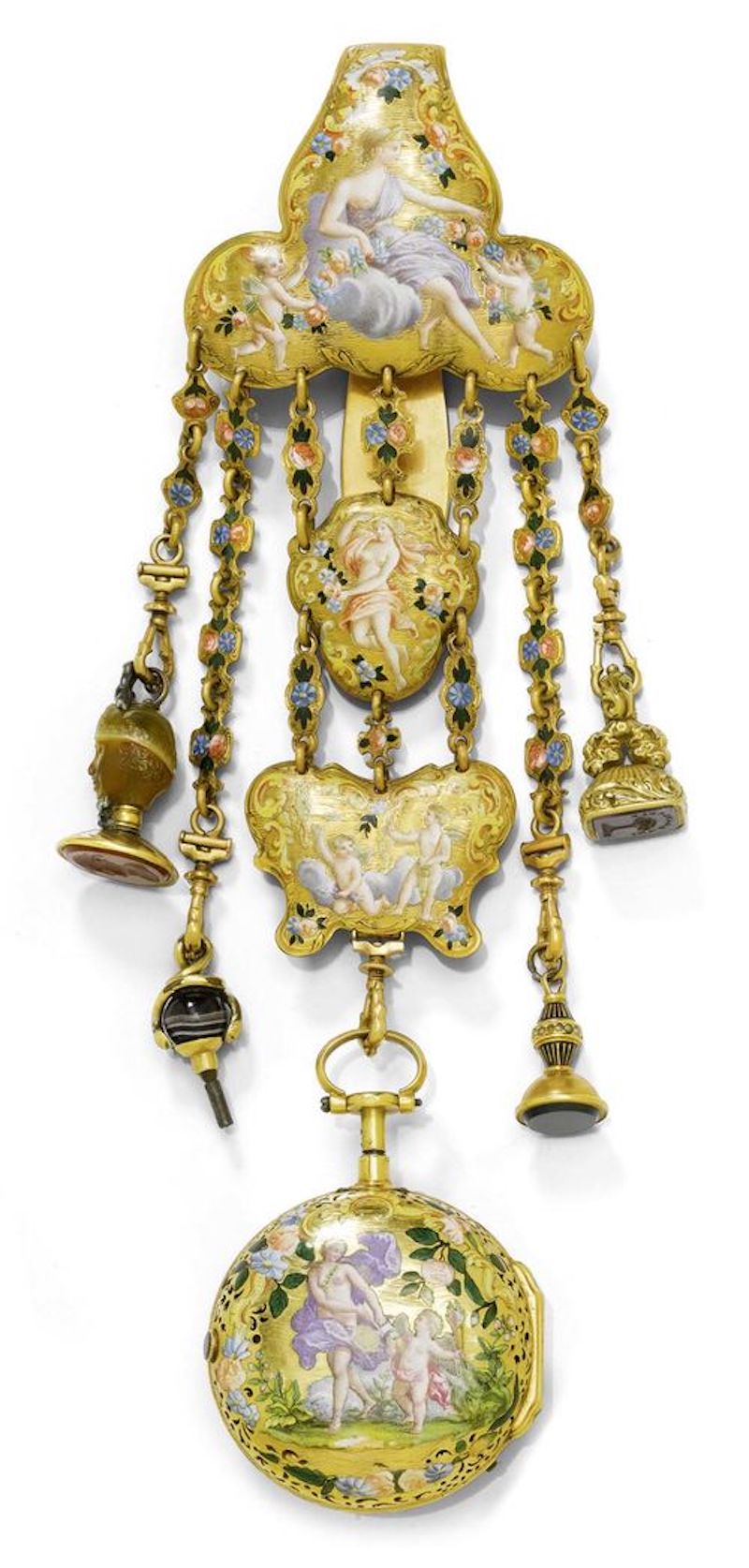
Fastening the chatelaine to her waistband with a brooch, or a hook hidden behind a medallion, she might attach good luck charms, needle cases, scissors, thimbles and tape measures for her embroidery activities, letter openers, small containers for smelling salts or perfumery, timepieces, even small hand fans, as well as miniature keys to unlock her personal jewellery box.
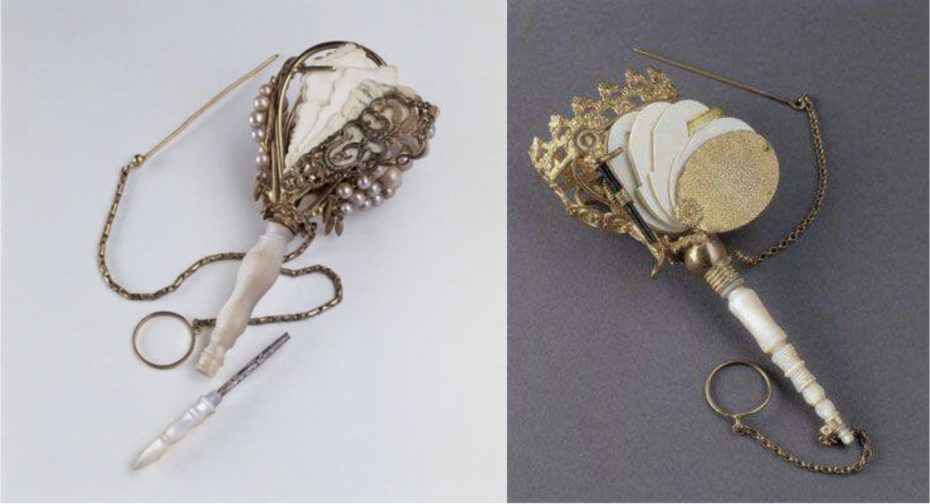
Some examples in museum archives include chatelaines that also feature ornate miniature notebooks made with ivory leaves and writing utensils attached, an accessory whose purpose we can now in fact identify! You might recall we recently delved into the lost romance of dance cards after the Netflix show Bridgerton brought them to our attention. Depending on a lady’s allowance, the designs could become quite elaborate, adorned with precious metals and glittering stones that would make quite the conversation starters as suitors approached her at society balls. The more creative the attached accessory the better!
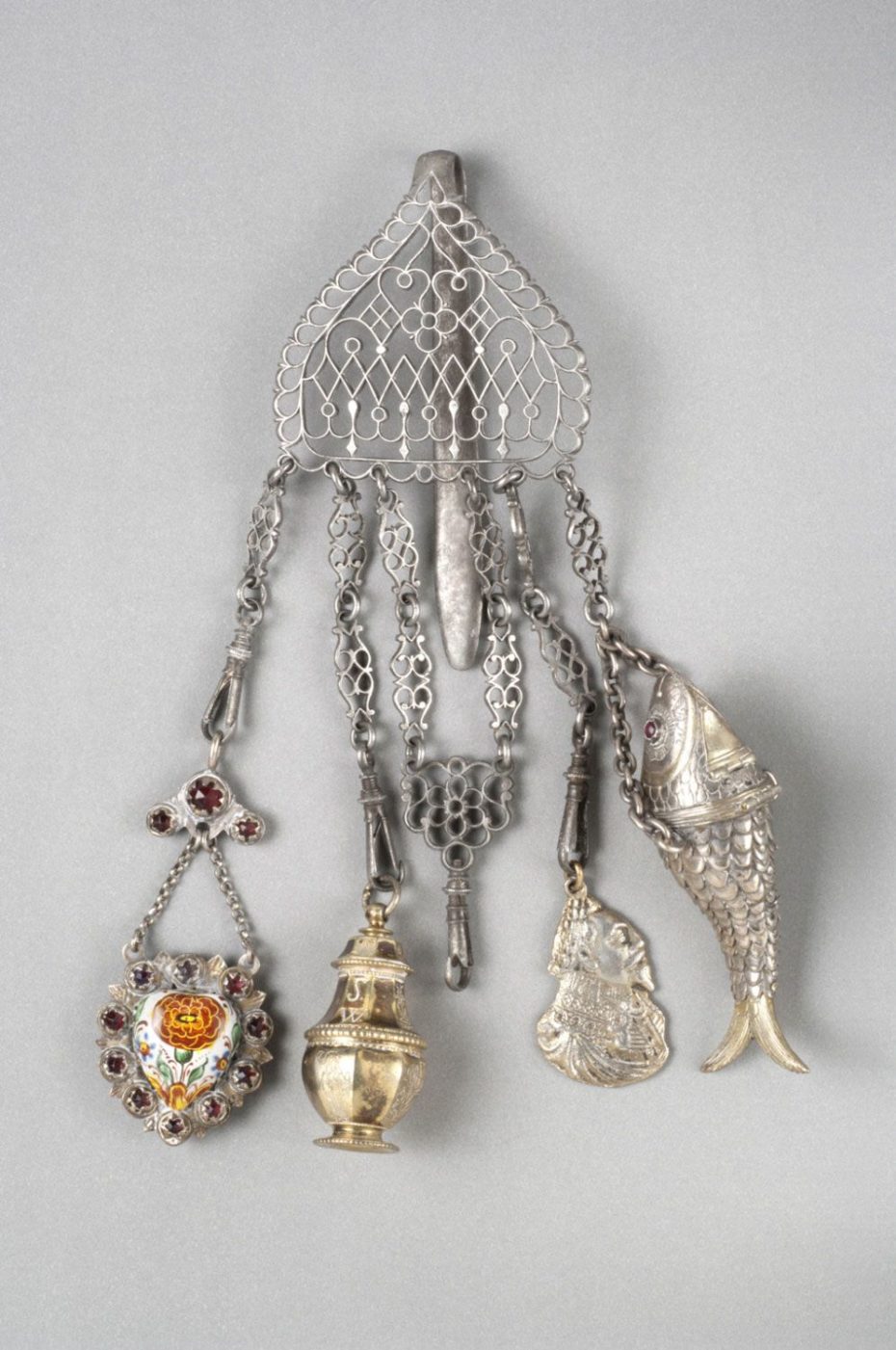
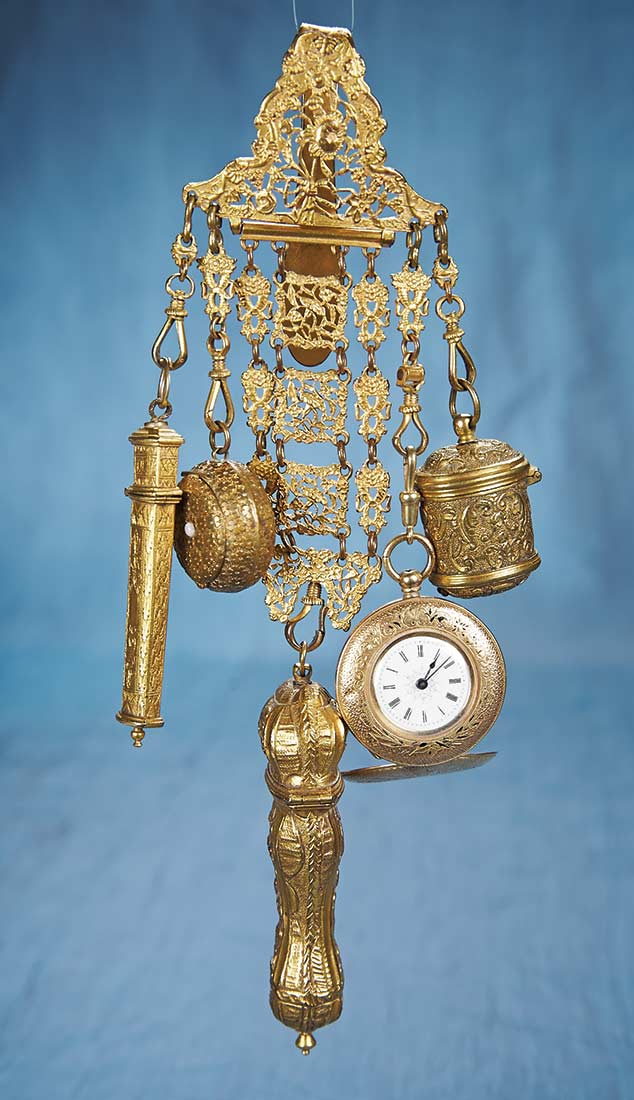
Genevieve Cummins, who co-authored the book Chatelaines: Utility to Glorious Extravagance notes in an interview with Collector’s Weekly that the term chatelaine didn’t come into use until a London magazine called The World of Fashion reported a the new accessory in 1828, giving the design’s name a romantic French twist.
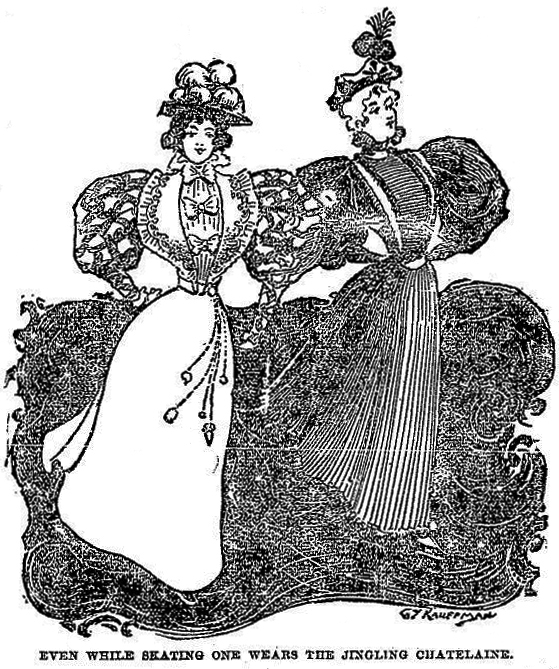
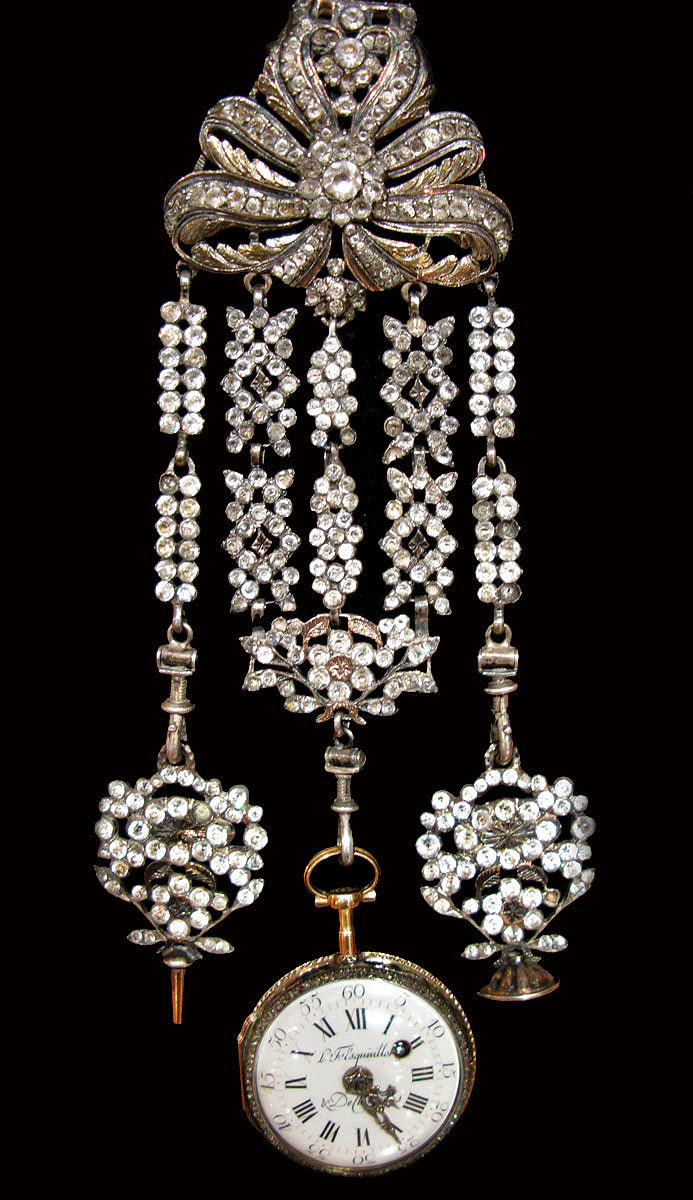
Big-name and jewellers and historic houses such as Boucheron, TIffany & Co, Faberge and Liberty fell over themselves to provide fashionable Victorian society with the newly-revived accessory du jour, but with it, the chatelaine’s place on a woman’s waist no doubt became more frivolous than functional.
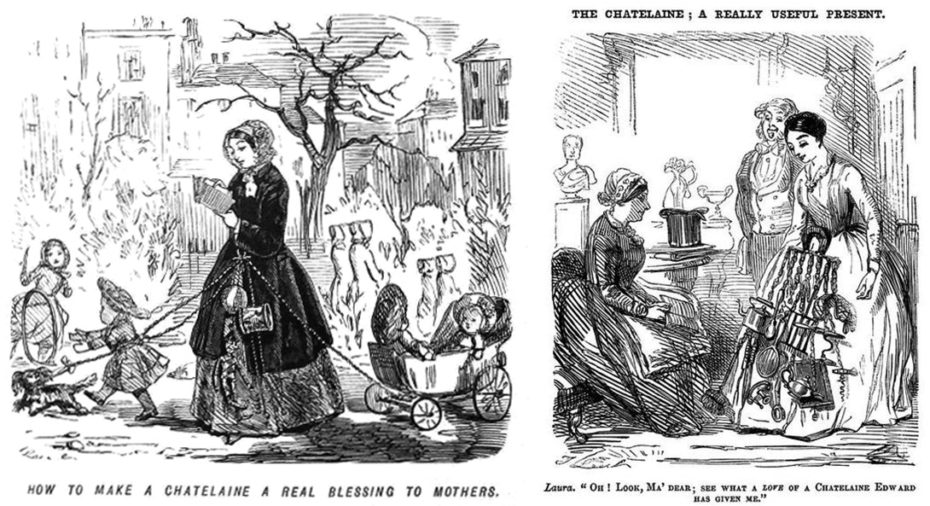
The use of chatelaines later faded after Edwardian times. Perhaps it had something to do with them earning a bad rap as a new generation rejected the more sinister traditions of strict Victorian ideals.
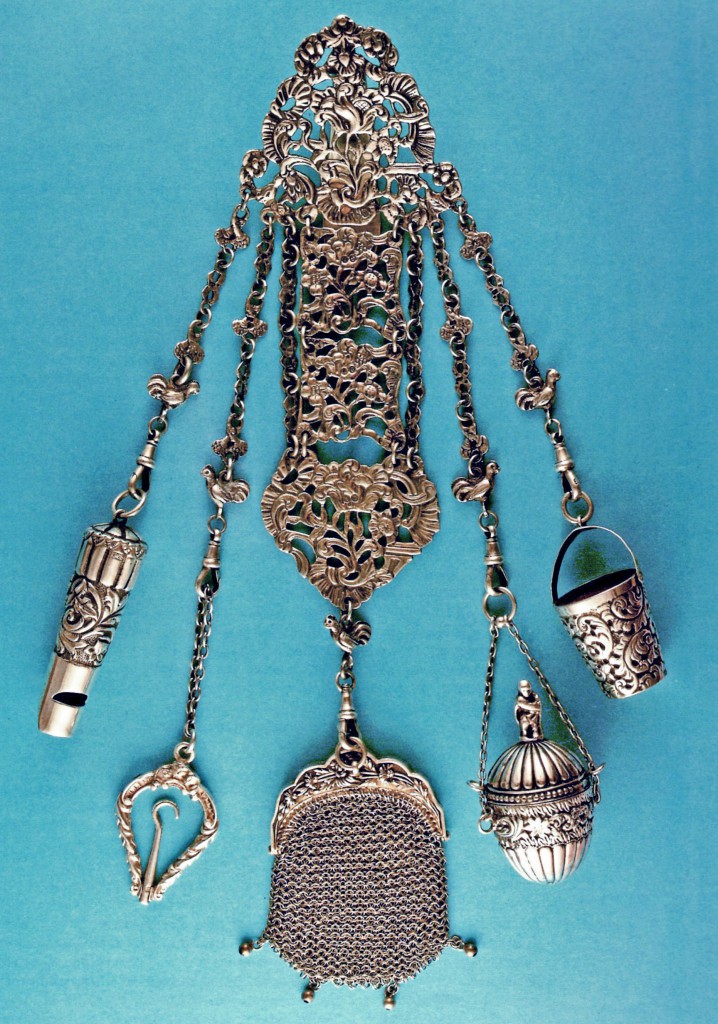
“Certainly, they clanked; when they moved, the chatelaine would’ve made a lot of noise,” says Cummins. “Nuns wore an equivalent device, and they got used to holding the chains when they were approaching the children, so the children couldn’t hear they were coming.”
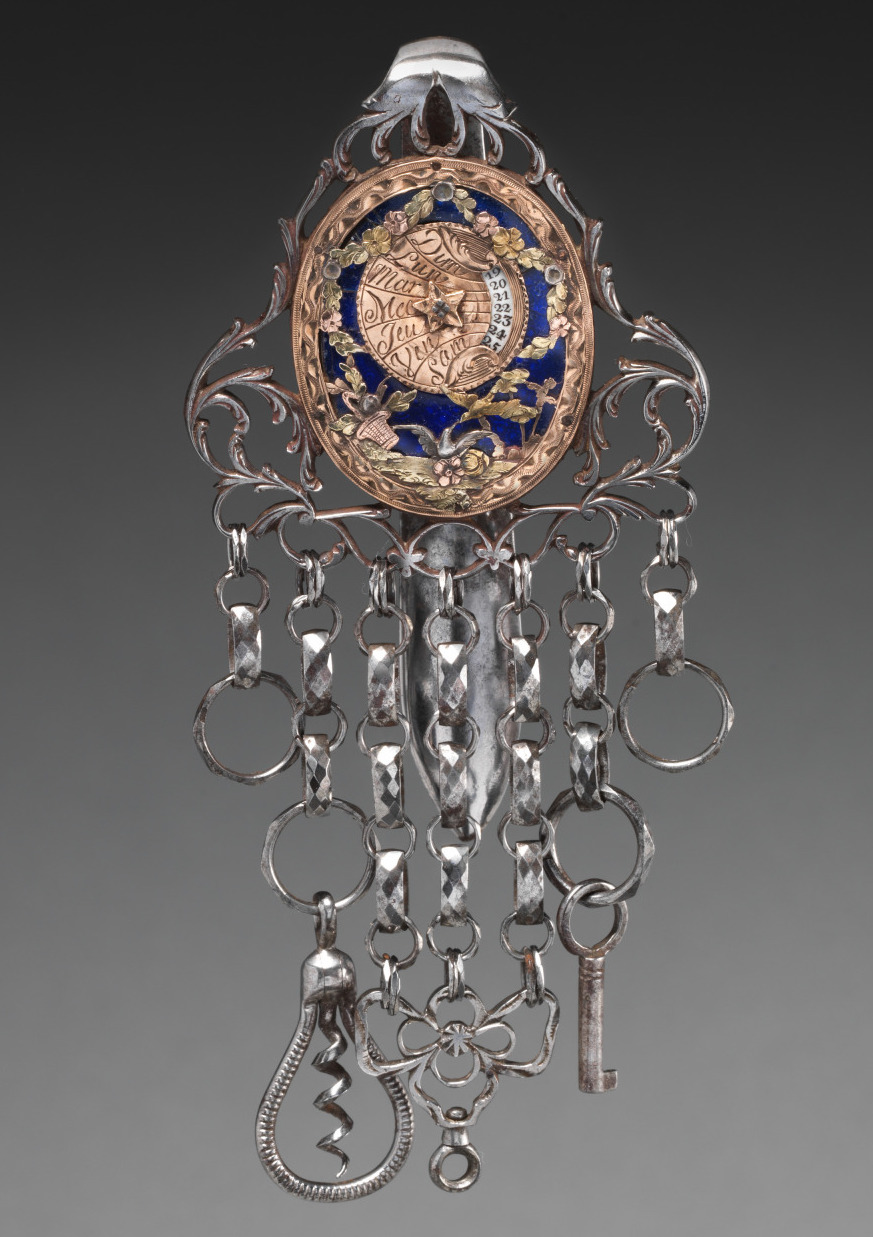
But might the chatelaine be due a comeback as the latest trends continue to innovate the women’s purse into an increasingly tinier accessory? Not to mention, as we find ourselves confined once more to the home in the midst of pandemic lockdowns, perhaps the chatelaine tool belt may very well find a purpose on our waists in this strange new world.


